
By Wylie Saviello
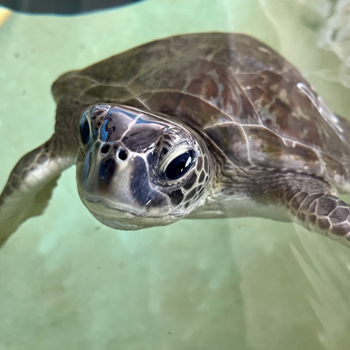
As sea turtles nest along local beaches and swim through waterways, they must overcome several adversities that human action creates.
Northeast Florida’s official sea turtle nesting season is May 1 through Oct. 31, coinciding with a time of year that yields higher boat traffic and an increased number of people fishing as turtles are circumnavigating rivers and oceans.
“Florida is an important nesting ground for the southeastern United States because again, [sea turtles] don’t sit still. Because they don’t sit still and they don’t stay in one place, wildlife managers have different population segments, and that’s how we can look at a finer scale of how turtles are doing,” said Catherine Eastman, the Sea Turtle Hospital Program Manager of the Whitney Laboratory for Marine Bioscience in St. Augustine, Fla.
Coastal development poses a serious threat to sea turtles trying to nest on beaches in the St. Augustine area.
Construction of homes, restaurants and hotels on the beachfront, along with beach renourishment and seawall construction, alters the coastline and forces nesting female sea turtles to resort to other beaches. This development also brings more people to the coastline, increasing human disturbance and wastewater runoff that can be unintentionally harmful to sea turtle habitat.
Some of the most common threats juvenile and adult sea turtles face due to this increased human recreation are boat strikes and accidental hookings. The University of Florida’s Whitney Lab for Marine Bioscience receives higher numbers of sea turtles injured from boating accidents and/or fishing hooks during the summer for rehabilitation.
The number of sea turtles admitted to rehabilitation centers in Florida due to injuries consistent with propeller impact or hull collision spikes during nesting season, says Loggerhead Marinelife Center in Juno Beach, Fla. Sea turtles swim slowly and often surface unexpectedly, making it harder for boaters to spot and avoid them. They can’t move as quickly as other marine life and are difficult to see from above the water.
In Florida alone, injuries consistent with vessel strikes are observed in 20 to 30 percent of sea turtles found floating or washed up on shore, according to NOAA Fisheries (National Oceanic and Atmospheric Administration). To help reduce harm to sea turtles, boaters should slow down in shallow waters and stay on the lookout for sea turtles near the surface, especially in nearshore areas and known nesting season hot spots.
Additionally, if boaters spot a floating, injured, or entangled sea turtle, they should call the FWC Wildlife Hotline at 888-404-FWCC (3922).
Sea turtles are often attracted to bait intended for fish, and fishermen can easily hook a turtle without meaning to.
The Whitney Lab advises those who do accidentally hook a sea turtle not to cut the line and never try to remove the hook themselves. They should tape the line to the top of the turtle’s shell and call the same FWC wildlife hotline. Leaving the line intact is a crucial step to avoiding causing a hooked turtle any additional injury. Not cutting the line allows the Whitney Lab’s veterinary team to determine the exact location of the hook and remove it more easily.
There are precautions fishermen can take to protect sea turtles. Opting for barbless circle hooks, as opposed to “J” hooks with prominent barbs, is a good way to prevent catching and injuring hard-shelled sea turtles, says Clearwater Marine Aquarium.
Sea turtles worldwide face a common threat that is harder to control: fibropapillomatosis. This disease, also known as “FP,” has been found in all seven sea turtle species, but primarily affects green turtles.
FP causes cauliflower-shaped tumors on external soft parts and internal organs of sea turtles, according to the Florida Museum’s Thompson Earth Systems Institute. Tumors around turtles’ eyes can impair their breathing and feeding, and tumors around their eyes can negatively impact their vision and lead to blindness in some cases. The exact cause of this disease is still undetermined, but research continues to examine it.
There is some good news, though.
“Green sea turtles in this population segment are doing great; they’re reproducing at excellent record-breaking nesting years, and even though the juveniles are impacted by this FP tumorous cancer disease, they’re still outpacing it, and so there’s still population growth,” said Eastman.
Eastman emphasizes the importance of looking past the broader statements found in media and into the minute details. Globally, green sea turtles are doing well, but there are populations in other coastal tropical areas where they’re declining.
“The devil’s in the details always. The headline might be good and great and pull you in, but the details are what really matter,” Eastman said. “It takes looking at specific nuggets [of information] to be able to make big decisions, and that is always the weighing of policymakers and nonprofits that focus on conservation.”
Plastic pollution also can’t be ignored in the context of sea turtles. Our oceans contain a plethora of microplastics, some of which regularly make their way into the mouths of young and hungry turtles.
Baby turtles eat whatever they can find, including microplastics floating in their seaweed habitat. Consuming these empty plastic calories creates a false sense of a full belly, and turtles will stop eating despite not getting the nutrition they really need.
The Whitney Lab published a study in 2020 that revealed concerningly high quantities of ingested plastic found in dead washbacks, which are post-hatchling sea turtles that have made it to the ocean but are washed back to the beach by any combination of strong winds, waves and currents.
“Depending on the year, we see 89 to 96 percent of the little turtles that we have necropsied are loaded with plastic bits,” Eastman said.
The study’s findings hit close to home. Plastic pollution is a well-known issue, but seeing the fatal results of a global problem in turtles hatched on our beaches puts the issue in a different, more startling light.
“We established that there’s a problem… so what do we do?” Eastman said. “You have to start evaluating yourself and your own choices before you can inspire others to make some changes, but change is what has to happen.”
It’s a huge issue to tackle, but starting on the individual level can still make a difference. Observing one’s plastic consumption and making conscious decisions to try to reduce that amount is something anyone can do. Eastman suggests choosing one thing that you can do differently in your life and focusing on that.
The best way to reduce waste is to not create it in the first place, which is daunting in a world where plastic seems to be everywhere. Using reusable shopping bags, choosing products with minimal packaging and using water filtration systems like pitchers or faucet attachments instead of buying plastic water bottles are all effective ways to reduce waste, according to the United States Environmental Protection Agency.
Whether it’s learning about where your food comes from or understanding that throwing something in the trash is not the end of its life, Eastman encourages people to learn more about the impacts of their consumption.
“Those are the types of little conscious things I think we all can do that, yes, make us feel better, but they also make us feel informed and in control,” Eastman said.
Improving and protecting local waterways plays a big role in protecting sea turtles among other marine life, and that’s where non-profit organizations come in. Non-profits can take a more advocacy-centered approach to spreading crucial information about the health of waterways and the marine life in them.
“[Matanzas Riverkeeper] is protecting the river, the water body, the things that live in it and that go into it, and so they also have a different voice than a research lab like the Whitney Lab that is part of the University of Florida,” Eastman said. “We can provide analysis for things that the Riverkeeper are doing to help them with their megaphone; say something to a greater community to inspire action… they can reach the masses through a different lens, and that is a wonderful balance.”
Research institutes like the Whitney Lab can publish articles that reach the science community, but environmental organizations can use the science from these articles to cast light on issues that need the attention of communities and politicians to make lasting change.
“Environmental organizations that have a beautiful blend of scientists, policy makers and attorneys can really make big differences… they play a critical role where our government and private industry right now is lacking.”

Be the first to comment on "Summertime brings increased hazards for sea turtles in Florida"