
By Audrey Cress
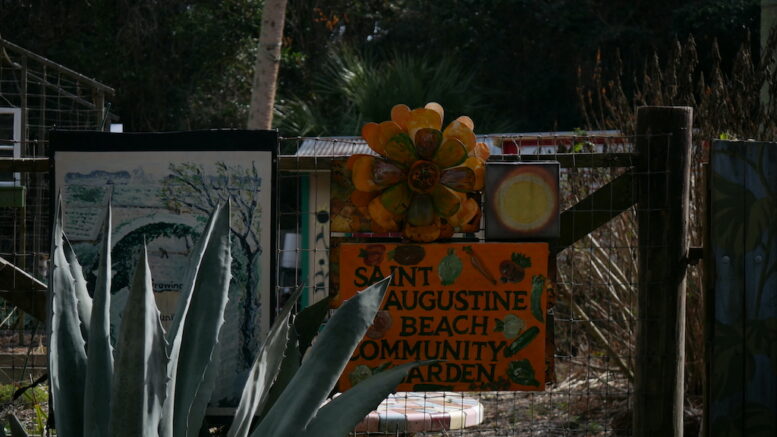
On a cool morning along the back wall of the fenced-in St. Augustine Beach Community Garden, a tall compost bin hums with life. Lift the lid, and there is a colorful collection of kitchen scraps in various stages of decay — coffee grounds and vegetable peels — layered with dried leaves and turned carefully by members who volunteer as the compost crew. No meat or dairy is welcome, nothing but what the soil will take back.

“Everything kind of just… goes back to nature,” said Debbie Tribbett, president of the garden, as she gestured toward three mounds of compost under plastic tarps and pieces of wood. The mounds will eventually be spread across more than 50 raised beds of kale, peas and carrots.
Founded around 2011, the community garden sits quietly behind a fence covered in flowering vines deliberately placed to attract bees. A bat house is mounted high on a pole in the center of the garden. Tribbett explained how even the bats play a role: their dung is considered top-tier fertilizer. Members follow a simple system — feed the soil, invite pollinators, and avoid chemicals commonly found in grocery store produce.
According to the U.S. Department of Agriculture, more than 99% of commodities sampled in 2024 had pesticide residues below established Environmental Protection Agency tolerances, with 42.3 percent showing no detectable residue. While federal standards regulate food safety, some gardeners still prefer growing their own produce organically.
In a state where climate swings and citrus disease challenge even commercial growers, the back-to-nature method requires patience.
Raised beds are rented for $40 per calendar year. The fee covers insurance and basic upkeep, and members agree to maintain their plots under written garden rules. Each board member takes on a responsibility — compost management, mowing or finances. Those who leave their beds unattended may be asked to leave.

“We have a written agreement that lays out all the rules of what you need to do to be a member here,” Tribbett said.
This structure is really essential to the function of the garden. In summer, when Florida’s heat bears down and some seasonal residents head north, weeds can quickly take over. Gardeners are asked to lay cardboard over empty beds to suppress weeds and prevent their spread. When the Florida sun sends up flowering shoots, crops turn bitter.
“As soon as it gets hot,” one gardener says, “we call it bolting.”
The unusual cold snap that came through St. Augustine this winter damaged plants in the garden like banana trees and pepper plants, even when they were covered. For similar issues and difficult maintenance, they don’t grow citrus trees either.
“Citrus trees are a lot of work,” a garden member said, referencing the persistent citrus greening disease that has changed the citrus orchards across the state. “There’s no cure, it’s just kind of sad.”
Despite weather setbacks, the garden remains a small but resilient hub of life. For many members, it is the only place they can grow their own food.
Tribbett first learned about the garden through a local newspaper ad advertising available raised beds. Living in a gated community where vegetable gardens are not permitted, she saw it as an opportunity.
“I just like a garden,” she said. “And I had taken a thorough master gardening course with the county’s parks and recreation center.”
What began as a practical solution became something more. She met her neighbors and joined in on the quarterly potlucks.

The garden’s founder, Nana Royer, who started this project more than a decade ago despite the push-back from surrounding homes near her first location, now has a lifetime membership in recognition of her efforts.
Today, butterflies float through the native plants on the perimeter of the fence. Compost collected from both members and non-members breaks down steadily in an accessible compost bin outside the fence.
The county park’s department trims back the trees when they grow too thick, allowing more sun to reach the beds.
Because the garden is on the property of Ron Parker Park, beehives aren’t permitted for the safety of those in the nearby dog park and pickleball courts. But of course, with the right vegetation, wild pollinators still find their way to the garden.
Inside the fence, the work is steady and unglamorous — turning scraps, pulling weeds, cutting back frost-burned stems and waiting for spring. Organic food grows slowly, season by season, nurtured by members committed to tending the soil.
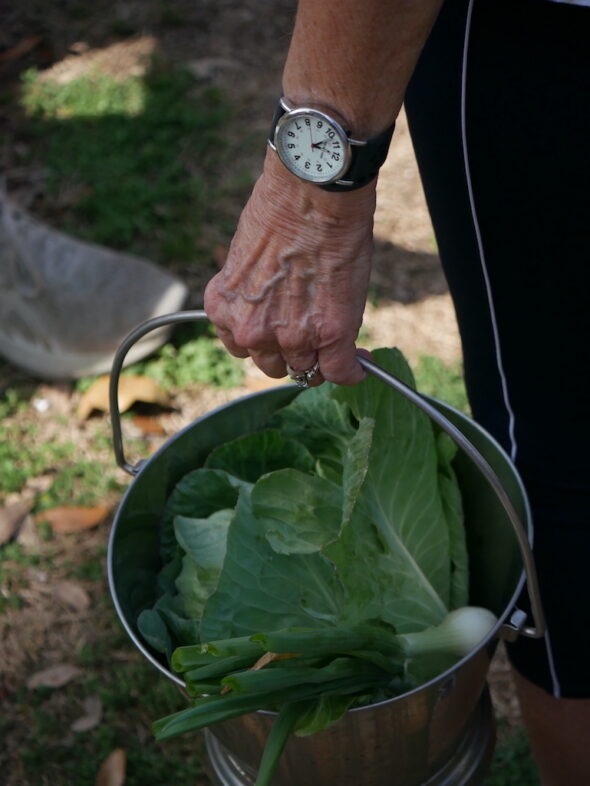
Debbie Tribbett began to cut at the base of the flourishing cabbage in her garden bed, placed it in a stainless steel bucket, and carried it to her car. That evening, it would be served at her dinner table — another meal grown from the small patch of earth she has dedicated herself to cultivating.





Be the first to comment on "Nature to Nature"