
By Bree Mallory
Burrowed right between Ringhaver Student Center and the Alumni House, the Crisp-Ellert Art Museum (CEAM) is free to the public and is used as a space for artists from all over the world to showcase their work to students and community members. Additionally, Flagler students, faculty and alumni are also welcome to present their art here.
The museum opened in 2007 after the passing of Joann Crisp-Ellert, who had used the space as an art studio since 1999.
Having stood as a museum for almost 20 years, CEAM has seen various artists of unique backgrounds come and go. A lot goes into selecting which artists or pieces are shown at the museum.
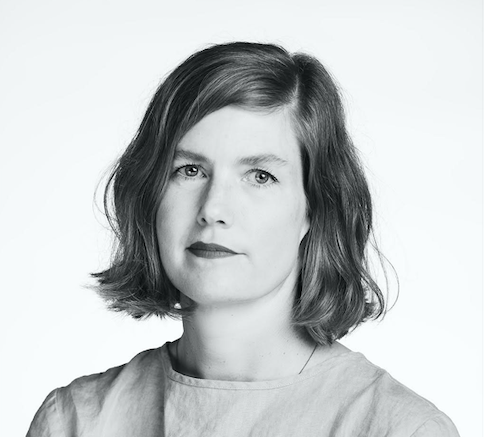
This is where Julie Dickover, the Director of the Crisp-Ellert Art Museum, comes in.
Originally from Oregon, Dickover spent a semester in New York City as an undergrad to study architecture, where she ended up falling in love with the arts. She began working at Flagler in 2010 after moving to St. Augustine with her husband. Previously, she was a registrar at a museum in Southern California.
Dickover oversees curation, cataloguing art, what art pieces go where on a campus-wide level and much more.
“I oversee everything that goes on [at CEAM],” Dickover said. “I create the shows, I work on short-term and long-term schedules and planning and programs surrounding exhibitions.”
Alongside all of this, Dickover also founded the museum’s Artist Residency program.
The Artist Residency program “is a regular program of artists-in-residence to engage in themes of place-making while collaborating with some aspect of St Augustine’s local community, the city’s significant and varied roles in American history, or its rich natural environment,” according to the CEAM page on Flagler’s website.
“I bring in an artist, and they’re usually here for about one to four weeks,” Dickover said.
Dickover travels often, and when she does, she goes to local museums to scout out artists for the Artists in Residency program, as well as those whose work she can exhibit at CEAM.
“Whenever I travel or I go someplace, I always make notes of work that I like or artists that I’m interested in,” Dickover said. “I… have a pretty extensive spreadsheet that I keep track of these things in!”
From now until November 7th, you can see some of the works of Nicole Antebi, one of the artists pulled from that spreadsheet, featured at CEAM.
Her exhibition, “Rebel Waters/Aguas Rebeldes,” is composed of many different mediums of art and revolves around “the historic meandering Rio Grande/Río Bravo… and the Santa Cruz River, which crosses the U.S. Mexico border in Southern Arizona to Northern Sonora Mexico and crosses back.”
“I first made contact with Julie Dickover when she and Patrick Moser invited me to screen my work at the Finger Mullet Film Festival,” Antebi said. “They are both wonderfully supportive and delightful to work with.”
A professor herself at the University of Arizona, Antebi believes that showing art on a college campus is important to “[encourage] students to look both inward and outward.”
“To me, college students are the next generation to usher in the future,” Antebi said.
Dickover agrees that college campuses are a great place to show art, otherwise she wouldn’t be doing what she does.
“I think it’s really important for students to be able to see work being made out there in the world,” Dickover said. “Making this type of work accessible to students is high on my priority list… I do think it’s important for us to consider perspectives that are not our own, because it allows us to grow as people.”
But who gets to decide what perspectives should and should not be shown? Earlier this year, artist Victor “Marka27” Quiñonez received backlash after presenting his exhibition “Ni De Aquí, Ni De Allá” at the University of North Texas. Quiñonez’s showcase focused on critiquing U.S. Immigration and Customs Enforcement policies.
Within a couple of days, the exhibition was shut down.
Dickover herself never really fears criticism due to the topics of some of the art she chooses to present at CEAM.
“I’ve never not invited an artist because I thought their work was too ‘radical’,” Dickover said.
Because Antebi’s exhibition relates to the U.S./Mexico Border, she was a bit worried as to how her work would be received here at Flagler.
“I wasn’t positive about how the work would be received,” Antebi said. “However, I had many thoughtful conversations with students, faculty, and folks from the community at large, who shared excellent [readings] of the work itself and a shared concern for the erosion of human rights and environmental protections in the United States.”
“In this country in particular, we’re so divided in all of these different ways, that it’s just important to talk about [difficult topics],” Dickover said. “Being able to talk about these things from a perspective of art, I think, is pretty cool.”
On the CEAM page on Flagler College’s website, the museum emphasizes the importance of “respect for the free exchange of ideas.” Dickover plans to keep it this way.

Be the first to comment on "Julie Dickover: The Woman Behind Flagler’s Crisp-Ellert Art Museum"